Why Car Manufacturers Are Returning to Physical Buttons Inside Vehicles
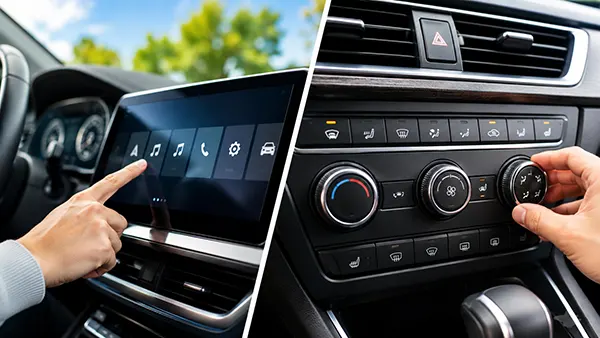
Over the past decade, car interiors have changed dramatically. Large touchscreens replaced rows of switches, climate controls moved into digital menus, and even basic functions such as seat heating or windscreen demisting became dependent on software interfaces. In 2026, however, many automotive manufacturers are reversing this trend. Brands including Volkswagen, Hyundai, BMW, Mercedes-Benz and Volvo have publicly acknowledged that fully touchscreen-based cabins created practical and safety-related problems for drivers. Physical buttons are returning not as a nostalgic design choice, but as a response to usability concerns, stricter safety expectations and growing customer dissatisfaction with overly complex infotainment systems.
The Safety Problems Linked to Touchscreen-Only Controls
One of the main reasons behind the return of physical controls is road safety. When a driver needs to adjust temperature settings or activate essential functions through several touchscreen menus, attention is taken away from the road for longer periods. Studies conducted by European road safety organisations between 2023 and 2025 demonstrated that touchscreen interaction can increase reaction times in a similar way to smartphone distraction. As vehicles introduced larger displays with more integrated functions, the problem became increasingly difficult to ignore.
Manufacturers also faced criticism from independent testing organisations. Euro NCAP announced updated safety recommendations encouraging carmakers to keep important controls accessible through physical switches or dedicated buttons. Functions such as hazard lights, indicators, wipers and climate settings are now viewed as essential tactile controls because they can be operated without visual confirmation. This shift has influenced automotive design strategies for upcoming vehicle generations.
Drivers themselves have contributed to this change in direction. Customer feedback collected by several European and Asian brands showed that many motorists considered touchscreen-heavy cabins frustrating during daily driving. Older drivers often found menu navigation inconvenient, while younger users complained about lag, software bugs and unnecessary complexity. As a result, manufacturers realised that digital minimalism did not always improve the user experience.
Why Physical Controls Improve Driver Concentration
Physical buttons provide tactile feedback that touchscreens cannot fully replicate. Drivers can identify the shape, position and movement of a switch without needing to look away from traffic. This allows many actions to become instinctive over time. Adjusting cabin temperature, changing audio volume or activating seat heating can be done through muscle memory rather than visual interaction.
Another important factor is response consistency. A mechanical button performs the same action every time it is pressed, while touchscreen interfaces may involve software delays, hidden menus or changing layouts after system updates. In cold weather or while wearing gloves, touchscreens can become less responsive, creating additional frustration for drivers in regions with demanding climates.
Automotive ergonomics specialists have repeatedly argued that cars should minimise cognitive overload. Modern vehicles already present large amounts of information through navigation systems, driver assistance technologies and digital instrument clusters. By returning basic functions to physical controls, manufacturers reduce the number of decisions and visual distractions required during driving.
Customer Demand Is Changing Interior Design Trends
Consumer preferences in 2026 are noticeably different from those seen during the early touchscreen boom. While buyers still expect modern connectivity and large infotainment displays, many no longer want every vehicle function hidden inside software menus. Practicality has become more important than futuristic minimalism, particularly in family cars, SUVs and long-distance touring vehicles.
Several manufacturers have openly admitted their previous design direction created problems. Volkswagen representatives confirmed that removing too many physical buttons from steering wheels and dashboards negatively affected customer satisfaction. The company has since started restoring conventional controls in newer models. Hyundai and Kia have taken similar approaches by combining digital screens with clearly separated tactile climate panels and shortcut keys.
The shift is also influenced by vehicle longevity. Owners increasingly keep cars for longer periods due to higher purchase prices and economic uncertainty. Physical buttons generally remain functional and intuitive for many years, while software interfaces may age quickly or become unsupported. Buyers are beginning to value simplicity and long-term reliability more than experimental digital interiors.
The Balance Between Digital Technology and Traditional Controls
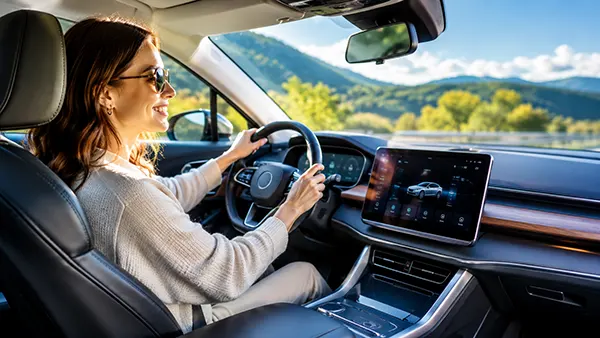
Modern manufacturers are not abandoning screens completely. Instead, the industry is moving toward hybrid cabin layouts that combine touchscreens with dedicated physical interfaces. Navigation, media streaming and vehicle settings continue to benefit from large displays, while frequently used driving functions return to mechanical controls.
This balanced approach is especially visible in premium and electric vehicles launched between 2025 and 2026. Carmakers now focus on reducing menu depth and providing shortcut access to common actions. Rotary dials, toggle switches and steering wheel buttons are being redesigned with higher-quality materials and improved ergonomics rather than eliminated entirely.
Interior designers have also recognised that tactile elements contribute to a vehicle’s character. Physical controls create a stronger sense of craftsmanship and mechanical interaction, which many drivers still associate with quality engineering. In contrast, cabins dominated entirely by flat glass surfaces are sometimes criticised for feeling impersonal or overly dependent on software.
Regulations, Reliability and the Future of Automotive Interfaces
Government regulators and safety organisations are playing a growing role in automotive interface design. In Europe, discussions around distracted driving have intensified as vehicles become increasingly digital. Some policymakers support clearer standards limiting the number of essential driving functions controlled exclusively through touchscreens. Although comprehensive legal restrictions are still evolving in 2026, manufacturers are already adapting to anticipated regulatory pressure.
Reliability concerns have also contributed to the renewed popularity of physical controls. Modern infotainment systems rely on complex software architectures, wireless updates and integrated processors. When software malfunctions occur, drivers may temporarily lose access to important vehicle features. Physical buttons provide a separate and often more dependable layer of control during technical failures.
Electric vehicles have further accelerated this discussion. Many early EV manufacturers focused heavily on minimalist interiors to create a futuristic image. However, customer reviews frequently highlighted usability frustrations connected to hidden controls and overloaded menus. Newer electric models now demonstrate a more practical design philosophy that combines advanced software with traditional tactile interfaces.
How Car Interiors May Develop After 2026
Future vehicle interiors are likely to combine intelligent digital systems with carefully selected physical controls rather than favouring one approach entirely. Voice assistants and artificial intelligence will continue improving, but manufacturers increasingly understand that drivers still need immediate manual access to important functions without navigating through multiple screens.
Another expected development is adaptive control layouts. Some manufacturers are experimenting with configurable physical buttons that can change function depending on driving mode while still preserving tactile interaction. Haptic feedback technology may also evolve further, although current systems still struggle to fully replicate the certainty provided by traditional switches.
The return of physical buttons reflects a broader change within the automotive industry. Instead of prioritising futuristic appearance alone, manufacturers are focusing more heavily on real-world usability, safety and long-term driver comfort. In 2026, successful vehicle interiors are no longer defined by the largest screen, but by how effectively technology supports the person behind the wheel.