Soft Robotics: How Flexible Machines Are Transforming Surgery, Logistics and Industry
Soft robotics has moved from experimental laboratories into real-world applications, offering a new approach to automation based on flexibility, adaptability and safe human interaction. Unlike rigid industrial robots, soft robotic systems are built from compliant materials such as silicone, polymers and smart textiles, allowing them to operate in complex, delicate and unpredictable environments. By 2026, this field has gained significant traction across healthcare, supply chains and manufacturing, where precision and safety are equally critical.
Soft Robotics in Modern Surgery
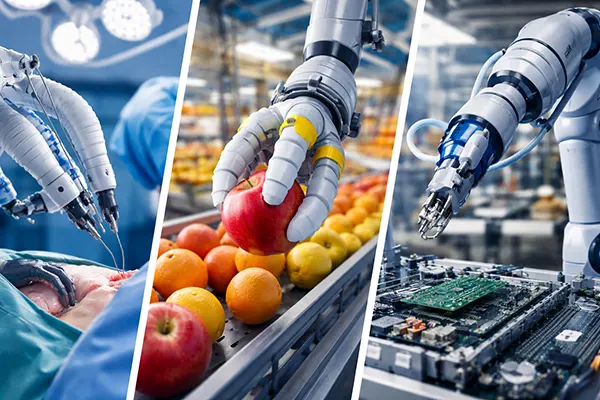
In healthcare, soft robotics has become a key driver of minimally invasive procedures. Flexible robotic instruments can navigate through narrow anatomical pathways with reduced risk of tissue damage. Systems inspired by biological structures, such as octopus arms or elephant trunks, provide surgeons with enhanced dexterity compared to traditional rigid tools.
One of the most practical developments is in robotic-assisted endoscopy. Soft robotic catheters can adjust their shape in real time, enabling access to previously hard-to-reach areas of the body. This improves diagnostic accuracy and reduces recovery time for patients, which remains a critical metric in modern medicine.
By 2026, research institutions and medical device manufacturers are focusing on integrating soft robotics with AI-driven imaging systems. This combination allows for more precise navigation, automated adjustments and improved decision support during complex surgical interventions.
Advantages and Current Limitations in Healthcare
The main advantage of soft robotic systems lies in their inherent safety. Their compliant structures reduce the risk of accidental injury, making them suitable for direct interaction with human tissue. This is particularly valuable in paediatric and delicate microsurgical procedures.
Another benefit is adaptability. Soft robots can conform to irregular shapes, allowing them to operate effectively in dynamic environments inside the human body. This capability significantly expands the scope of minimally invasive techniques.
However, challenges remain. Control systems for soft robots are more complex due to their non-linear behaviour. Additionally, durability and sterilisation standards require ongoing development to meet strict medical regulations.
Applications in Logistics and Warehousing
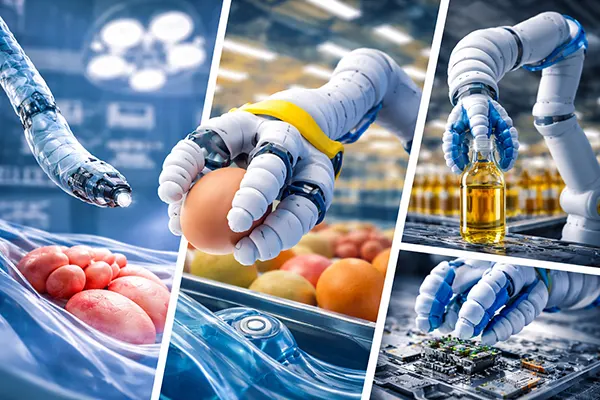
In logistics, soft robotics is addressing one of the most persistent challenges: handling fragile and irregularly shaped items. Traditional robotic grippers often struggle with variability, leading to inefficiencies and product damage. Soft robotic grippers, on the other hand, can adapt their grip strength and shape to suit each object.
Major logistics companies have already implemented soft robotic picking systems in fulfilment centres. These systems are capable of handling items ranging from fresh produce to delicate electronics without the need for manual sorting. This improves throughput while maintaining product integrity.
By 2026, the integration of soft robotics with computer vision and machine learning has further enhanced automation in warehouses. Robots can identify, classify and handle items autonomously, reducing reliance on manual labour and improving operational efficiency.
Impact on Supply Chain Efficiency
The adoption of soft robotics contributes to more flexible supply chains. Companies can process a wider range of products without redesigning their automation systems, which reduces capital expenditure and increases scalability.
Another important factor is safety in human-robot collaboration. Soft robotic systems are less likely to cause injury, allowing them to operate alongside human workers without extensive protective barriers. This leads to more efficient workflows and better utilisation of workspace.
Despite these advantages, implementation costs and integration complexity remain considerations. Businesses must balance initial investment against long-term gains in productivity and reduced error rates.
Industrial Use and Future Development
In manufacturing, soft robotics is reshaping production lines that require precision and adaptability. Industries such as electronics, food processing and pharmaceuticals benefit from robots capable of handling sensitive components without damage.
Soft robotic actuators are increasingly used in assembly processes where traditional rigid systems lack the necessary finesse. For example, in electronics manufacturing, these robots can manipulate small components without applying excessive force, reducing defect rates.
Looking ahead, hybrid systems that combine rigid and soft elements are gaining attention. These designs offer a balance between strength and flexibility, making them suitable for a broader range of industrial tasks.
Technological Trends and Outlook for 2026
One of the most significant trends is the use of advanced materials, including self-healing polymers and electroactive materials. These innovations improve durability and extend the operational lifespan of soft robotic systems.
Another key development is the integration of sensors directly into soft structures. This enables real-time feedback on pressure, deformation and contact, allowing for more precise control and improved performance.
As research progresses, soft robotics is expected to become a standard component of automation strategies across multiple sectors. Its ability to operate safely in complex environments positions it as a practical solution for industries seeking both efficiency and adaptability.