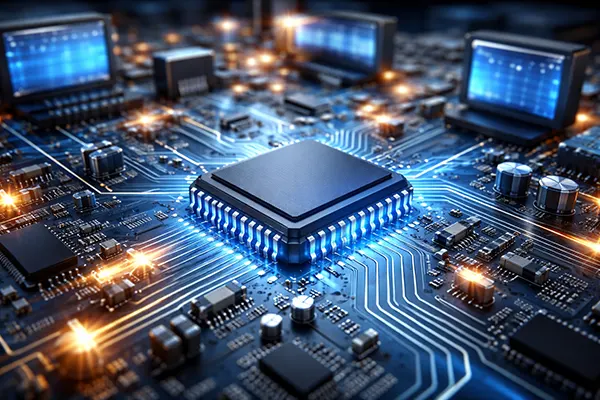
How the Role of Microcontrollers Is Changing in Modern Devices
Microcontrollers have long been a foundational component of electronic devices, but their role has evolved significantly in recent years. What were once simple control units are now central elements in complex, interconnected systems. As of 2025, microcontrollers are no longer limited to basic signal processing or hardware control; they actively shape how devices interact with users, networks, and their environments.
From Simple Control Logic to System Intelligence
Historically, microcontrollers were designed to execute narrowly defined tasks such as switching relays, reading sensor values, or controlling motors. Their limited memory, processing power, and connectivity reflected the technical constraints and expectations of earlier electronic designs. In many consumer and industrial products, they acted as invisible helpers rather than decision-making components.
Over the past decade, this role has expanded considerably. Modern microcontrollers integrate faster cores, extended memory, and dedicated peripherals for communication, security, and power management. These changes allow them to manage entire subsystems independently, reducing the need for separate processors and simplifying overall device architecture.
In 2025, microcontrollers are often responsible for coordinating multiple functions simultaneously. They monitor system health, manage energy consumption, and adapt device behaviour in real time. This shift reflects a broader trend toward smarter, more autonomous electronics across consumer, industrial, and medical sectors.
Integration of Advanced Processing Capabilities
One of the most significant changes is the inclusion of advanced processing features directly within microcontrollers. Many current models incorporate hardware acceleration for mathematical operations, signal processing, and even basic machine learning tasks. This enables faster responses without relying on external computing resources.
Such integration is particularly relevant in devices that require immediate decision-making. Wearable health monitors, automotive control units, and industrial sensors benefit from local data analysis, reducing latency and improving reliability. Microcontrollers can now process raw data on-site instead of merely forwarding it elsewhere.
This development also contributes to system resilience. By handling critical operations locally, devices remain functional even when network connections are unstable or unavailable. As a result, microcontrollers have become key contributors to dependable, real-time system behaviour.
Microcontrollers in Connected and Distributed Systems
The growing importance of connectivity has reshaped how microcontrollers are designed and deployed. Modern devices rarely operate in isolation; they communicate with other components, local networks, or cloud-based services. Microcontrollers now serve as communication hubs within these connected environments.
To support this role, manufacturers equip microcontrollers with integrated interfaces such as Ethernet, CAN, Bluetooth, and low-power wireless protocols. These features allow seamless interaction between sensors, actuators, and higher-level systems without excessive external circuitry.
In distributed systems, microcontrollers often coordinate tasks across multiple nodes. They manage synchronisation, data exchange, and fault detection, ensuring that complex systems operate cohesively despite their modular structure.
Security and Reliability as Core Responsibilities
As connectivity increases, so does the need for robust security measures. Microcontrollers are now expected to enforce security at the hardware level, protecting devices from unauthorised access and data manipulation. This represents a major shift from earlier designs where security was largely external.
Current microcontrollers frequently include secure boot mechanisms, encrypted storage, and hardware-based key management. These features help ensure that only trusted firmware runs on the device and that sensitive data remains protected throughout its lifecycle.
Reliability is equally critical. In applications such as automotive systems or medical equipment, microcontrollers must operate predictably under strict conditions. Built-in diagnostics, redundancy support, and fault-handling mechanisms have therefore become standard rather than optional.
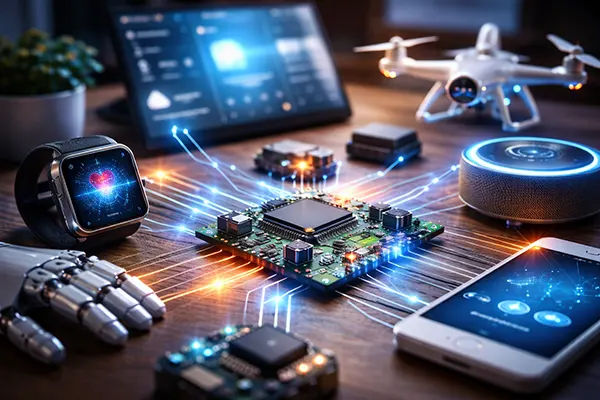
Energy Efficiency and Application-Specific Optimisation
Energy efficiency has become a defining factor in microcontroller development. With the rise of battery-powered and energy-harvesting devices, microcontrollers must deliver high performance while consuming minimal power. This balance shapes both hardware design and software execution.
Manufacturers now offer multiple low-power modes, dynamic voltage scaling, and peripheral-level power control. These features allow devices to remain operational for extended periods without frequent recharging or maintenance.
In 2025, energy-aware programming is an essential part of microcontroller-based design. Developers increasingly tailor software behaviour to match real-world usage patterns, further extending device longevity.
Specialisation for Industry and Use Case Demands
Another notable trend is the growing specialisation of microcontrollers for specific industries. Rather than relying on generic components, designers select models optimised for automotive safety standards, medical compliance, or industrial automation requirements.
Such specialisation reduces development complexity and improves regulatory alignment. Integrated features designed for particular environments allow engineers to focus on system functionality instead of extensive custom adaptation.
This evolution highlights how microcontrollers have moved beyond universal components. They now represent carefully chosen building blocks that directly influence device capability, efficiency, and long-term reliability.