
Neuromorphic Chips for Energy-Efficient Artificial Intelligence in Devices
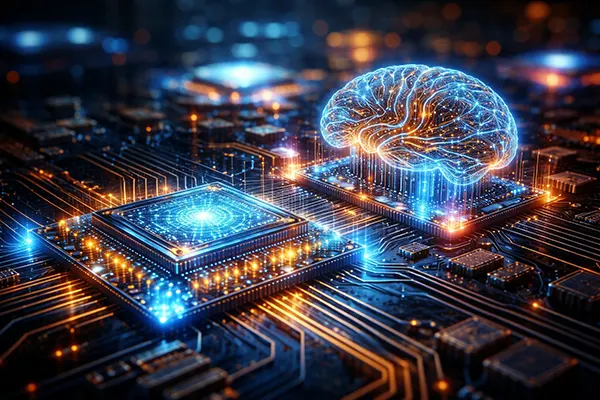
Artificial intelligence is no longer confined to data centres. By 2026, machine learning models are running directly on smartphones, wearables, industrial sensors and autonomous machines. This shift towards edge AI has exposed a fundamental limitation: traditional processors consume too much energy when performing neural network inference continuously. Neuromorphic chips offer a different path. Inspired by the architecture of the human brain, they process information through spiking neural networks and event-driven computation, dramatically reducing power consumption while maintaining real-time responsiveness. In this article, I will examine how neuromorphic hardware works, where it is already being deployed, and why it is becoming critical for the next generation of intelligent devices.
How Neuromorphic Chips Differ from Conventional AI Hardware
Conventional AI acceleration relies heavily on GPUs, TPUs and specialised NPUs optimised for matrix multiplication. These architectures are efficient for training and inference in large, batch-based workloads, but they remain fundamentally clock-driven and memory-hungry. Data must constantly move between memory and compute units, which leads to significant energy loss. This so-called “von Neumann bottleneck” becomes particularly problematic in edge devices with limited battery capacity.
Neuromorphic processors are designed around spiking neural networks (SNNs), where computation is triggered only when a neuron “fires”. Instead of continuous numerical operations, they rely on sparse, event-driven signals. This means that when there is no meaningful input, the system consumes almost no energy. The approach mirrors biological neural systems, where efficiency is achieved through asynchronous signalling and local memory storage.
By integrating memory and processing elements within the same structures, neuromorphic chips reduce data movement dramatically. Architectures such as Intel’s Loihi 2 and research systems like IBM’s TrueNorth have demonstrated orders-of-magnitude improvements in energy efficiency for specific inference tasks. In edge scenarios such as gesture recognition or anomaly detection, power consumption can drop to milliwatt levels.
Event-Driven Computing and Spiking Neural Networks
Spiking neural networks differ from conventional deep neural networks in that information is encoded in the timing of spikes rather than in continuous floating-point values. This temporal encoding allows systems to process dynamic signals—such as audio, radar or neuromorphic vision—more naturally. In 2026, SNN toolchains have matured significantly, with frameworks supporting conversion from traditional models into spike-based equivalents.
Event-driven computing also pairs well with neuromorphic sensors. Event-based cameras, for instance, transmit changes in pixel intensity rather than full image frames. When connected to neuromorphic hardware, this reduces redundant computation and enables ultra-low-latency processing. Applications in robotics and autonomous drones benefit from reaction times measured in microseconds.
Importantly, the asynchronous design reduces thermal output. For battery-powered devices or embedded systems in industrial settings, lower heat generation translates into longer operational life and simpler cooling requirements. This physical efficiency makes neuromorphic architectures attractive beyond consumer electronics.
Real-World Applications in 2026
Neuromorphic chips are no longer confined to laboratories. In 2026, they are increasingly integrated into edge AI modules for smart manufacturing. Predictive maintenance systems use spiking models to detect subtle vibration anomalies in rotating machinery, operating continuously with minimal power draw. This allows sensors to remain active for years without battery replacement.
In healthcare technology, wearable monitoring devices leverage neuromorphic processors to analyse biosignals such as ECG and EEG data locally. Instead of transmitting raw data to the cloud, these devices detect irregularities in real time, improving privacy and reducing latency. The energy savings are crucial for medical wearables that must operate reliably around the clock.
Autonomous robotics is another key domain. Small robots and drones benefit from neuromorphic vision systems that process environmental changes instantly. Because computation occurs only when events happen, navigation systems become more responsive while extending flight time. This is particularly valuable in search-and-rescue operations and environmental monitoring.
Edge AI and Privacy Advantages
Running AI directly on devices reduces reliance on constant cloud connectivity. Neuromorphic processors enable complex inference locally, which helps protect sensitive data. In sectors such as healthcare and defence, minimising data transmission is not only a performance issue but also a regulatory requirement.
Energy efficiency also supports sustainable technology strategies. As environmental regulations tighten across Europe, reducing the carbon footprint of digital infrastructure has become a strategic objective. Devices that can process AI tasks without continuous server communication reduce overall energy consumption across the network.
Furthermore, decentralised intelligence improves system resilience. Devices equipped with neuromorphic chips continue functioning even when network connectivity is disrupted. In industrial or remote deployments, this reliability is a decisive operational advantage.
Technical Challenges and Future Development
Despite significant progress, neuromorphic computing still faces technical hurdles. One of the main challenges is software maturity. While toolchains for spiking neural networks have improved, they are not yet as standardised as frameworks for conventional deep learning. Developers require specialised knowledge to design and optimise SNN models effectively.
Another limitation concerns scalability. Neuromorphic chips excel at sparse, event-driven workloads, but they are not universal replacements for GPUs in large-scale model training. In practice, hybrid architectures are emerging, where conventional accelerators handle training and neuromorphic processors manage inference at the edge.
Manufacturing complexity also plays a role. Integrating memory and compute units in dense, brain-inspired topologies demands advanced fabrication techniques. However, semiconductor advances in 3D stacking and emerging memory technologies such as memristors are gradually addressing these constraints.
The Outlook for Neuromorphic AI Hardware
By 2026, leading semiconductor companies and research institutions are investing heavily in neuromorphic research. European initiatives under the Human Brain Project legacy and US defence-funded programmes continue to refine architectures for real-time adaptive systems. Commercial adoption is accelerating as edge AI demand grows.
Future developments are likely to focus on adaptive learning directly on-device. Online learning capabilities would allow systems to update models continuously without cloud retraining. This would mark a significant shift towards autonomous, context-aware machines.
In the longer term, neuromorphic computing may contribute to more sustainable AI ecosystems. As energy constraints become central to digital transformation strategies, architectures that replicate the brain’s efficiency offer a pragmatic path forward. Rather than replacing existing hardware entirely, neuromorphic chips are positioned to complement and extend the capabilities of intelligent devices in a power-conscious world.