Robots for Servicing Satellites in Orbit: Repair, Refuelling and Longer Missions
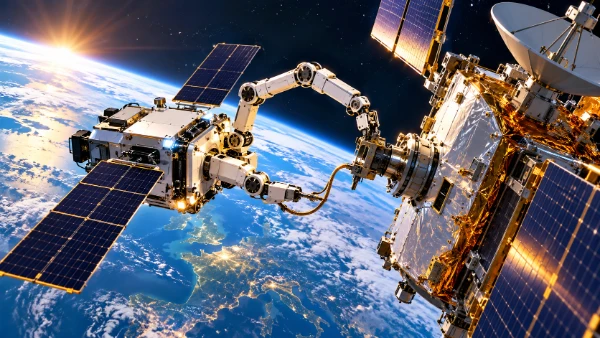
Satellites are usually built to work for years without physical maintenance, but that approach is beginning to change. Robotic servicing spacecraft can now approach another satellite, inspect it at close range, attach to it and provide practical assistance without bringing it back to Earth. Some systems already extend the lives of operational communications satellites, while newer vehicles are being developed for repairs, component installation and refuelling. By 2026, orbital servicing has moved well beyond laboratory demonstrations, although different capabilities are progressing at different speeds. Life extension has already been proven commercially, sophisticated robotic servicing hardware is now in orbit, and dedicated refuelling systems are being prepared for further demonstrations.
How Robots Service Satellites That Cannot Be Reached by Astronauts
Most satellites spend their entire working lives far beyond direct human reach. This is particularly important in geosynchronous Earth orbit, or GEO, roughly 36,000 kilometres above Earth. Satellites there provide communications, weather monitoring and other services, but sending astronauts to repair them is not a practical routine option. A servicing robot therefore has to perform many of the jobs that a technician would normally carry out: locate the satellite, approach it carefully, inspect its condition and make physical contact without damaging either spacecraft.
The first challenge is getting close enough safely. A servicing spacecraft uses navigation sensors, cameras and onboard software to determine the relative position and movement of its target. During the final approach, even a small error matters because both objects are travelling through space at high speed. The servicer gradually reduces the distance while matching the target’s orbit. Depending on the mission, the satellite may actively cooperate with the process or may simply continue operating normally while the servicing vehicle handles the manoeuvre.
Docking is only the beginning. Once contact has been established, the servicing spacecraft may take over some propulsion duties, move the satellite to a different orbital position or use robotic arms to carry out closer work. Northrop Grumman’s SpaceLogistics demonstrated the life-extension model with its Mission Extension Vehicles. MEV-1 docked with Intelsat 901 in February 2020, while MEV-2 attached to Intelsat 10-02 in April 2021. Instead of opening or rebuilding the satellites, the vehicles supplied propulsion and attitude support, allowing spacecraft with limited remaining fuel to continue operating.
From Simple Docking to Robotic Repair and Inspection
Life-extension vehicles are relatively straightforward compared with a robot designed to manipulate satellite hardware. A more capable servicing spacecraft needs arms, joints, cameras and interchangeable tools that can operate reliably in vacuum and extreme temperature changes. It must also deal with satellites that were not originally designed to be repaired after launch. Handles, covers, antennas and propulsion components can all differ between spacecraft, so there is no single servicing procedure that works for every mission.
A major step came on 21 July 2026, when SpaceLogistics launched its Mission Robotic Vehicle, or MRV, carrying the robotic system developed through DARPA’s Robotic Servicing of Geosynchronous Satellites programme. The vehicle has two robotic manipulator arms with interchangeable tools, cameras and lighting. Its planned tasks include detailed inspection, satellite relocation, installation of additional equipment and work intended to resolve certain hardware problems. The spacecraft is travelling towards GEO, where its robotic capabilities are intended to support both commercial and government satellites.
This does not mean that damaged satellites can now be repaired as easily as cars in a workshop. Orbital repair remains highly dependent on the satellite’s design and the type of fault. A robotic arm may be able to inspect an area, manipulate an accessible mechanism or install an external device, but replacing deeply integrated electronics is much more difficult. The practical progress in 2026 is therefore important because servicing is expanding from propulsion support towards a broader range of physical interventions, rather than because every satellite fault has suddenly become repairable.
Refuelling Satellites and Extending Their Useful Working Lives
Fuel is one of the main factors that limits the life of a satellite. Even when its electronics, communications equipment and power systems remain healthy, a spacecraft needs propellant for tasks such as maintaining its orbit, controlling its orientation and moving away from threats or potential collisions. Once that supply falls too low, operators may have to retire an otherwise functional satellite. Extending propulsion capability can therefore postpone replacement and preserve the value of hardware that is already in orbit.
The Mission Extension Vehicle approach solves this problem without transferring fuel. Instead, the servicing vehicle docks with the client satellite and effectively provides an additional propulsion system. MEV-1 completed its initial five-year assignment with Intelsat 901 in 2025 and subsequently moved on to another client. MEV-2 has supported Intelsat 10-02 since 2021. These missions established that a servicing spacecraft can attach to an existing GEO satellite and take over propulsion functions for several years.
SpaceLogistics is also developing smaller Mission Extension Pods, or MEPs. Rather than remaining as large independent vehicles beside one satellite, these compact propulsion units are intended to be installed by the MRV. Three MEPs were launched together with the MRV in July 2026. According to SpaceLogistics, an installed pod can add six or more years of service by providing extra propulsion. This approach could allow one robotic servicing vehicle to support several customers instead of dedicating a complete large servicer to each satellite.
Why Actual In-Orbit Refuelling Is More Complicated
Transferring propellant from one spacecraft to another introduces a different set of problems. The two vehicles must dock securely, create a leak-tight connection and move fuel at controlled pressure and temperature. The process also has to work without contaminating sensitive satellite components. Older spacecraft were generally not built with standard orbital refuelling connections, which makes servicing them much harder. For that reason, current industry efforts increasingly focus on preparing new satellites for future refuelling before they are launched.
Orbit Fab’s RAFTI, short for Rapidly Attachable Fluid Transfer Interface, is one example. It is designed to serve as both a conventional ground fill-and-drain valve and an interface that can later be used for docking and fuel transfer in orbit. The system includes alignment features intended to help a visiting spacecraft position itself correctly. In 2024, the US Space Force accepted RAFTI as an interface for in-space refuelling applications, and by 2026 the technology was being considered for a growing range of government and commercial spacecraft.
However, it is important to separate available hardware from completed commercial refuelling operations. Orbit Fab has outlined a network based on RAVEN fuel shuttles and NEST fuel depots, and it continues preparing demonstrations involving hydrazine transfer. Its current mission schedule places major GEO-adjacent demonstrations such as Kamino and Mynock in 2027. This means that, as of 2026, satellite life extension through attached propulsion has a stronger operational record than routine fuel delivery from one spacecraft to another.
Why Orbital Servicing Could Change the Way Satellites Are Designed
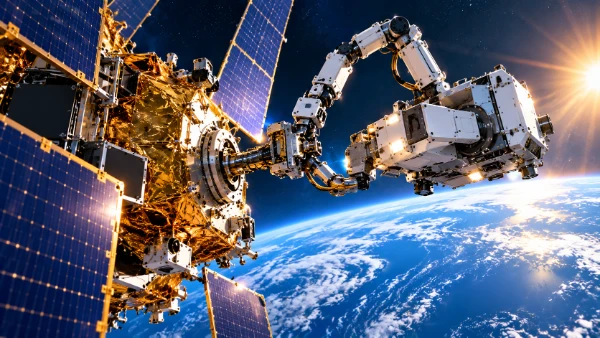
The importance of satellite servicing goes beyond keeping one spacecraft alive for a few additional years. Traditional satellites are designed around the assumption that nobody will touch them after launch. Engineers therefore include enough fuel for the planned mission, duplicate critical systems where possible and accept that ageing equipment cannot normally be replaced. If servicing becomes more predictable, future satellites could be designed from the beginning with accessible components, docking points and standard interfaces for fuel, power or replacement hardware.
That shift could also change the economics of satellite ownership. GEO communications satellites are expensive assets and can remain technically useful even when their original propulsion supply is almost exhausted. Extending an existing mission may allow an operator to postpone the cost and disruption of building and launching a replacement. Servicing also creates the possibility of upgrading selected equipment instead of replacing the entire spacecraft, although practical upgrade options will depend heavily on how future satellites are constructed.
Another benefit is flexibility. Additional propulsion can allow operators to reposition satellites more freely instead of conserving every manoeuvre because fuel is finite. A servicing vehicle may also inspect a satellite after an anomaly, giving engineers images and other information that are impossible to obtain from Earth. Inspection does not automatically solve a problem, but it can help determine whether the spacecraft has suffered structural damage, whether an external mechanism has failed or whether intervention is realistic.
The Remaining Limits and the Next Stage of Orbital Robotics
Orbital servicing still faces several practical limits. Rendezvous and docking require careful planning, and every additional contact between spacecraft introduces risk. Many satellites currently in orbit have no dedicated servicing interface, so robots may need to work with structures that were never intended for docking. Operators must also be confident that a servicing mission will not interrupt an otherwise functioning spacecraft. These factors make reliability and precise control just as important as the strength or reach of the robotic hardware.
The industry has also learnt that ambitious servicing programmes can become expensive and difficult. NASA discontinued its OSAM-1 project after reviews identified continuing cost, schedule and technical challenges, as well as reduced demand for refuelling satellites that had not been designed for servicing. The decision highlighted a broader change in strategy: rather than expecting robots to adapt to every legacy spacecraft, many current projects favour satellites that are prepared for servicing through standardised interfaces and compatible hardware.
By the end of 2026, the clearest picture is therefore one of gradual expansion rather than a single technological breakthrough. Commercial life-extension missions have already proved that one spacecraft can support another for years. The MRV has brought a much more capable robotic servicing system into space, although its full GEO servicing programme still lies ahead. Dedicated refuelling interfaces are available and fuel-transfer missions are progressing towards further demonstrations. Together, these developments point towards satellites that are less disposable, more serviceable and capable of remaining useful long after the limits that once dictated an automatic retirement date.